Sunday, January 28, 2018

136 Avid Anglophile

Avid Anglophile

My anglophile tendencies have recently propelled into overdrive as movies and TV series have fed my obsession for anything pertaining to England.

I have always loved the literature and culture of our British friends, but in the last few weeks, various entertainment outlets have given fans like me an amazing amount of shows and movies to devour with great enthusiasm and feeling.
The series on Queen Victoria last year on PBS got my attention. I could never miss an episode and was so sad when it concluded. But to my delight season 2 began this January with even more intriguing and sensational plot twists. 

Of course, it is all based on history so there should not really be any surprises, but the drama never ceases to amaze me and pique my curiosity. I also read that there will be a season 3--yeah!

This series is described this way: “A teenager in 1837, Victoria is crowned queen and navigates the scandal, corruption, and political intrigues of the Court, according to PBS’s Masterpiece series. She soon rises to become the most powerful woman in the world. The spirited monarch was perhaps the first woman to have it all.”
If that wasn’t enough to keep me totally invested in these royal subjects, the series, “The Crown,” was brought to my attention. I didn’t think I could find it on TV. I have a remote I can talk to so I asked it and like magic, the series appeared. I’m into season 2 and can’t get enough of the series.

Netflix describes it as a drama that “follows the political rivalries and romance of Queen Elizabeth II’s reign and the events that shaped the second half of the 20th century.”

And it certainly fulfills that goal with twists and turns that keep the action moving, sometimes a little methodical but that is the British way. The civility is overwhelming but occasionally a spark of emotion comes through. 
This is usually from Princess Margaret, who keeps the royalty constantly in a state of surprise as her lifestyle is not so civil and proper.

Both of these series, portray the queens facing issues most women face--juggling husbands, work, children, and more. Of course, these are at such levels that most of us cannot comprehend but we do empathize with family and obligations.

Both series show how powerful women must maintain their control but appease the husbands who often feel left out and suffer feelings of unfulfillment.

Nevertheless, I can’t stop watching. There is something about the queens that draws me in and keeps me turning on the shows. I know how it ultimately turns out but it is fascinating how it all unfolds.

“The Crown” is especially interesting since the queen and prince are still serving in those roles. It makes one realize how the modern-day issues were prevalent in the early days and have somewhat been resolved in this century. Divorce looms heavily in many situations that would not be an issue today.

The gravity of the situations is also emphasized as the simplest of issues often are full of extenuating circumstances. Alas, the life of a queen is quite complicated==far more than wearing a crown and fancy gowns.

Also, in “Victoria,” a recent episode discussed the British troops in Afghanistan. One of the advisers urged bringing the troops home, but they suffered defeat before that happened. He went on to say the area was extremely rocky and hilly and the natives constantly fought among themselves. Sound familiar!!
In addition to these TV series, the movies have added to an Anglophile’s obsession--The Darkest Hour was released recently. This tells the story of the early days of World War II. “The fate of Western Europe hangs on the newly-appointed British Prime Minister Winston Churchill, who must decide whether to negotiate with Hitler or fight on against incredible odds,” according to a web link about the movie.

Of course, we all know how that decision affects the entire world, but the agonizing and difficult path followed to reach that conclusion is revealed with excellent acting and writing.

I urge all of you who share my love of all things English to watch when possible these series and movie. I have no idea why I am so obsessed this way, but I can never resist these types of shows. My husband tolerates my watching habits, and it is especially interesting since he is the one with English, Irish, and Scottish heritage while I have absolutely none. There is no accounting for taste.

He won’t even consider another trip to the United Kingdom. I have enjoyed every moment of my visits, but he has had enough. If you notice I am AWOL, then I may have slipped away to get more doses of English life!!

Anglophile Frances                   

Sunday, January 21, 2018

135 Value of naps & update


The Value of Naps & Update on Readers

I was feeling a little guilty for regularly enjoying an afternoon nap. Although it isn't my fault--Tootsie, my Jack Russell pup, directs me to the chair most days right after lunch.


I start out reading a book or scrolling through my tablet, but before long we are both snoozing.

No guilt trip necessary--research says that naptime is good. Not only that but after lunch is best!

For most people a regular nap will increase alertness and may prevent heart attacks. Individuals who have trouble sleeping at night probably should avoid naps.


I don't follow all the napping advice. I don't sleep in a dark room or set an alarm. Naps should be under 30 minutes so the napper does not enter into deep sleep. If you feel very groggy upon waking from a nap, it probably means you have interrupted deep sleep. The best way to overcome the grogginess is to walk in the sunlight. Guess that won't work for rainy-day naps, which to me tend to extend too long.


A rubber duckie reader!

An update on reading figures

As you know, I collect statues of readers. My sister sent me two cute readers for Christmas:
 Then I found four readers when visiting some resale shops. And I did not buy a single one!

I am, however, keeping a virtual collection:

As I type, someone is snuggling beside me. Please excuse me for about 20 minutes.

Trishzzzzzzzzzzzzzzzz              


Sunday, January 14, 2018

134 Reflecting on 2017

Reflecting on 2017

Good grief! January is nearly halfway over. We haven’t even celebrated Christmas 2017. The grandchild had bronchitis, husband sick, etc., etc., etc. You may recall that our 2017 was highlighted with funerals, weddings, broken appliances, new furnace, rewired electricity, and leaks. Hoping for a nice, quiet, uneventful 2018. Maybe, maybe not. We shall see.


Also, regular readers know that I spend far too much time “surfing the web.” So, I checked many sites to see what 2017’s most popular “hits” were. Below are some highlights of last year that I found. Maybe you will know them all; most will know most of them. 

First, I was flabbergasted that if one simply types in “top stories of 2017,” the return is over 8 million results in .83 seconds (and we still have Hughes Net for our computer service!). 

Next, I read my favorite news sites; then, I chose a few random sites as well. [An aside: some popular press, including the Washington Post, showed the top 10 for each month and no cumulative list--those I eliminated in my unsophisticated analysis.] Third, I have listed for you the findings of respected news sites. Here’s hoping you enjoy skimming them and maybe learning about something or someone you missed. I did. How do “breaking news” stories not embed themselves in the neurons?
The Associated Press: 
1. Sexual Misconduct(the list is too long to iterate here) 
2. Trump’s First Year controversies (again, the list is long) 
3. Las Vegas Mass Shooting 
4. Hurricane Onslaughts – Harvey, Irma, and Maria 
5. North Korea (who has the biggest red button – my editorial remark) 
6. Trump/Russia Probe along with the fates of Comey, Mueller, and Flynn 
7. Obamacare--What Happens Next? 
8. Tax Overhaul – What does it mean for budget deficits, health care, and corporate taxes? 
9. Terror Attacks – from NYC to Istanbul, from Barcelona to England, and places worldwide
10. Islamic State – losses in Mosul, Iraq, and Raqqa, Syria, but continuing operations in Egypt and Afghanistan.
NPR: (note differing interests) 
1. Trump politics 
2. California’s iconic Sequoia Tunnel Tree felled by storm 
3. Radioactive Cloud particles over Europe--where did they come from? 
4. Republican Tax Overhaul and its effects 
5. Las Vegas Shooting

The New York Times:
1. Las Vegas Shooting 
2. Alabama Election--Jones defeats Moore 
3. Mayweather v. McGregor--10 rounds TKO 
4. Hurricanes 5. Judge Blocks Trump order on refugees 
5. Matt Lauer Firing (referencing many offenders before this announcement)

Google: Most popular searches for 2017 
1. Hurricanes 
2. Matt Lauer 
3. Tom Petty’s death (oops--I thought he was the race car driver! Duh!) 
4. Super Bowl 2017 
5. Las Vegas shooting 
6. Mayweather v McGregor fight 
7. Solar Eclipse (how quickly we forget--the only site choosing eclipse that I selected) 
8. Aaron Hernandez (had to look him up!!--guess not watching enough football and sports news) 
9. Fidget Spinners

So, now, dear readers, it’s on to 2018. Stay warm and stay well. 

Savvy Glenne            


Sunday, January 7, 2018

133 Mind your language

Mind your language

Words fill our minds, capture our hearts, and help us reveal our innermost thoughts. But words don’t always mean the same thing to all people. The level of the words we use dictates how we are perceived whether good or bad.

“Words are, of course, the most powerful drug used by mankind,” said author Rudyard Kipling. I think this has a great deal of truth to it. How else do we feel loved or important?

Language is so valuable and important in everything we do and say. For the first time in my 70-some years, I have heard words coming from the leaders of our country that shock and dismay me, but that is another story.


Sometimes, it can be enjoyable to throw in a few $50 words to wow the people listening. They may have no idea what it means. Just make sure the meaning of the word is correct and is being used properly. There is nothing worse that misuse of a fancy word. Provenance is a good example and has a very specific use.

Some words come into vogue over time, but don’t stay too long or are content specific. This past year saw a plethora ($50 word) of vocabulary that may not make it to the end of 2018. These are not new words or phrases but have been used in excess to the point of ad nauseam. Examples include progressive, socialist, conservative, liberal, surveilled (which is a proper form but sounds strange), taxes, nuclear, fake, resigned, failing, tweets, probes, leaks, firings, fraud, voting, irregularities, etc. 


Expressions also will take us off guard, such as “take a knee.” For those who grew up Roman Catholic, this has special meaning. We take a knee when we enter the church and when we leave (genuflecting in and out of the pew), and also we kneel for more of the service than we either sit or stand, and we even kneeled for communion in my earlier years. We consider it respectful in the most reverent way.

On another level, four-letter words often put us in situations we often don’t want. These words take the conversation in a downward spiral nose dive very quickly, making it hard to recover or come back to a level field. The answer is don’t use them out loud. Maybe use them when we are alone or silently in the mind. Years of teaching school taught me to never let these words leave my lips. There would be “hell” to pay otherwise --- word is used intentionally here. Believe me, I use them, but I try to keep it clean around the grandkids or when I just meet someone.

Talking to grandkids is another level–-short sentences that be answered with grunts and groans – are about all we can manage in between messaging and photos on social media. If we can get them to look up briefly, we are doing well. A text message often gets the fastest reply.

Grown children are not much better at times. They are so busy that words have to be important and to the point. Be careful of word choice because it can be taken a different way than what is intended.
Degrees of meaning is also crucial. The best, top of the line, the only one are examples that can get us in trouble. To prove something is one of the above is very difficult and often subjective. I learned when I was reporting and editing to rarely use the absolutes. One of the first, one of the top (you get my drift) or something similar is much safer and more accurate.

Maybe I am being too cautious but it is extremely difficult to properly communicate using the American version of the English language. Try talking to someone from the United Kingdom -- meaning as well as pronunciation are almost like a foreign language.


My advice as we head into 2018 is to learn new words, use them sparingly, and be careful with phrasing thoughts, questions, and ideas. The person on the other side of the conversation may get an entirely different meaning than what is intended. A recent conversation with our six-year-old grandson brought joy to our hearts as he exclaimed that he didn’t have school the day after New Year’s so we could extend our visit one more day. That may not sound that exciting, but to us it was golden, and he had just the right words to convey a heartfelt message!

Frankly Frances                       


Sunday, December 31, 2017

132 Civil War Ancestors

Civil War Ancestors

Since I have frequently shared my interest in Civil War history, you can guess that I would want to know all about my Civil War soldier ancestors.

So far I have located one great-great-great grandfather who was a Union soldier from Indiana. I was content with that--pretty exciting. Then I saw a posting from Ancestry that made me wonder:
Since my mother's parents were immigrants from England and Germany, that leaves my father's side.  Most of his ancestors go back at least to the American Revolution so potentially, I could have 7 more who fought in the Civil War! I have much more research to do!

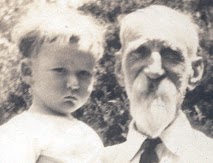
In the meanwhile, I would like to introduce you to Samuel Druley, my great-great-grandfather. I do not have a photograph of him in uniform, but I treasure the one I do have in which he is holding my father.

Samuel was born in 1840 in Marion, Indiana. He enlisted August 4, 1862, in the 12th Indiana Infantry Regiment, Company C. According to the company descriptive book, he was a farmer, 21 years old, 5 ft. 9 inches, with a light complexion, blue eyes, and dark hair.

His pension files are voluminous because his health was poor after the war and he requested increases to his original pension of $12 per month due to illnesses and injuries contracted during the war. The Pension Office was bureaucracy at its fineness and Samuel supplied many forms, certifications from physicians, and sworn statements from neighbors and other men in his military unit. 

It is a shame that he had such an ordeal filing for pension increases, but to my research, it is wonderful because it provides multiple accounts of his time in the war.

After he enlisted, Druley's Regiment headed south where 6,500 inexperienced Federal troops fought a Confederate force of 19,000 at the Battle of Richmond, Kentucky. Just 26 days after he joined the army, Samuel was captured--along with an estimated 4,144 other Union soldiers. 

In his pension filing, he states that they slept on the wet ground and he contracted a sore throat and cough. The federal forces were paroled, but Samuel was so sick that he had to be left behind with a friendly farmer while the rest of the troops marched to Cincinnati. He eventually rejoined his unit. By June 1863, the regiment was in Mississipi and participated in the blockage of Vicksburg.

Druley was part of General William Tecumseh Sherman's March to the Sea. In his pension filing, he stated that he was in 28 battles. The testimony of his comrades was that his throat troubles continued throughout and that he frequently sought treatment from the unit's doctors but sickness did not stop him from his duty. 

The captain of his company, Edward Lenfesky, testified that "He was always ready to do his share of duty. He was a good faithful soldier. He never shirked his duties. .. He was a splendid soldier, temperate in his habits, and always ready for duty at all times unless wholly incapacitated."

Lenfesky qualified that description, saying that was before Druley's injury.  
The unit captured a Confederate munitions manufacturing operation near Cheraw, South Carolina. When retreating, the Southern forces threw a great deal of powder and shot into a ravine. The infantry was resting near the ravine when it exploded. A number of men were killed and many injured. Druley received head and back injuries. Although he was in significant pain, he remained with the unit until the grand parade in Washington, D.C. where the regiment was mustered out June 8, 1865.

Druley returned home to Indiana, where he married Jane Kem, who lived on the farm next to his father's farm. They moved to Peru, Kansas in 1884, which is where my father lived.

In 1924, Samuel Druley requested that the Pension Office physician examine him at home because he was too ill to come to him. He died at age 84 on Dec. 15, 1924, before the pension examination could take place.

His story is not unique. Many more soldiers died of disease than from wounds of war. A federal bureaucracy trying to deal fairly (and often failing) with huge numbers of soldiers is a story that sadly exists today. 

Trish     

Sunday, December 24, 2017

131 Proustian Christmas??

Contemplating Christmas 2017

Dear Readers, I hope you had a happy Christmas.

Somehow December 25 arrived before I was ready for it – again this year! As a “type A” list maker, this should not be. This said I do find that a good book, a new free online computer game, holiday catalogs, and hot topics on the internet take up more of my time than they should. 

What I enjoy most not only at Christmas but all year are Proustian-type conversations with family and friends. Marcel Proust, a French novelist and essayist, devised a list of questions as a parlor game which he posited could give one real insight into people. My favorite magazine, Vanity Fair, interviews a notable person with some of Proust’s questions on the last page of each edition. 

These conversations (Proust questions), however, are what my Mother used to call “sophomoric conversations.” 

What she meant was let’s get on with what we SHOULD be doing and not sitting around “talking fool talk.” Sophomore does not just mean the second year of high school or college but also immature wisdom. Some of the high schoolers with whom I often substitute call it “conversating.” 

Anyway, since there are no relatives or friends here today, I made a list of some questions and challenge you to think about some of these – with a friend, a cousin, or just in your own head.

Here’s a list of some “sophomoric” conversation starters (or finishers).

  • Complete this sentence: This Christmas I hoped . . . but . . . . 
  • What person do you most admire? 


  • Would Christmas be the same at your house if you did not decorate or put up a Christmas tree? 
  • Suppose President Trump issued an executive order that December 25 would no longer be a holiday from work. What would you say to him?
  • Of all the gifts you can purchase, what is the one gift that you would give to every child in the world?

  • Would you rather have Rudolph the Red-Nosed Reindeer or Frosty the Snowman be real? Explain.
  • What is your favorite holiday song or hymn? Explain.
  • What is your idea of perfect happiness?
  • What did you wish you had done this holiday season that you did NOT get done?
  • Why do we tell “white” lies?
  • If someone asked you what your greatest accomplishment was, how would you answer?


  • According to a Pew Research survey, 79% of shoppers did some or all their shopping online or by phone app. How did you shop? 
  • Who are your heroes? In real life? In fiction?
  • What is your life’s motto?


Thankfully, I have good friends with whom I have great conversations. With one of them, we still have questions for the members of the Nicene Council (or, more properly, the Council of Nicea) and what’s included or not included the Bible. 


With another, we often talk/argue/discuss politics. With family, it is often wonderful old stories or embarrassing tales. So, while you are doing the dishes, cleaning up the wrapping paper, or curled up in front of the fire, think about some of these questions. I hope they give you a little relaxation from the frantic side of the holiday.

And, by the way, it’s time to 
decide how you plan to watch 
the ball fall on New Year’s Eve!


Best wishes to all for a healthy, happy 2018. 

Glenne


Sunday, December 17, 2017

130 Check one--bucket list


A check mark on the bucket list

I don’t know why but I have wanted to transverse the Panama Canal for several years now. My husband did not share my interest in this adventure. But for some reason this summer, he gave in, and the trip became a reality as well as a check mark on the bucket list.

The trip did not disappoint even for my husband as we went from the Atlantic to the Pacific Ocean in 8 to 10 hours. (about 50 miles) on a small cruise ship. The weather was amazing and the views spectacular. 


From one lock to another, we rose and fell in a rhythmic pattern until we reached a huge lake. We had no idea the canal was part freshwater lake. We crossed Gatun Lake which is 85 feet above sea level to reach the locks to take us to the Pacific.


The guide that joined us on the cruise ship to cross the canal was extremely knowledgeable and so informative. There was no facet of the operation that he did not explain or report.


Also, special pilots come aboard the ship to take over from the regular ship’s pilots to ensure a safe and successful crossing. Machines with ropes reaching to the ship on each side appear to pull or guide up and down the locks – the machines are on a track that runs along the locks on each side.

From 13,000 to 14,000 ships pass through the canal yearly with 35 to 40 a day. So there is plenty to see and observe on the deck as the journey takes place. The locks fill up quickly and also empty fast so the ship can reach its destination.


We were as close to the large cargo ships as we are to trucks hauling goods on the interstate highways. But the pace is much slower so you have time to guess what is in the huge containers and where the cargo is headed.

We began the journey by land in Panama City and drove to the Atlantic side. We boarded the ship and crossed the canal to the Pacific so we landed back in Panama City. A very unusual strip of land enables the crossing to be so much shorter than going around Cape Horn. The United States accomplished the construction of the marvel more than 100 years ago after others had suffered defeat.


As the guide pointed out sites along the trip, one stood out as the prison where dictator and drug trafficker Manuel Noriega was kept. He ultimately died in a Panama hospital. The guide remarked as the prisoners waved to the passing ships – how often would this happen anywhere else in the world.


A few more interesting facts about the area--Panama City is thriving with amazing high-rise buildings dotting the landscape. The guides told us the population was close to two million in the city and surrounding area. It was a bustling metropolis with the atmosphere similar to any large city in the U.S.


Also, we learned that a Panama hat is made in Ecuador. There are many stories about the origin of the popular headpieces. In 1906, U.S. President Theodore Roosevelt gave the hats a boost when a photo was taken of him looking over the construction of the canal.
My husband agrees the canal is amazing and definitely worth the trip. In addition, the Panama beaches, as well as those in Costa Rica, were gorgeous. The monkeys, sloths, lizards, birds, and various other wildlife did not disappoint.

My favorite visit was to a chocolate farm with refreshments, made from the crop and offered at the end of the tour. The fresh fruits were also spectacular, cut from the vines and trees and served on the spot.

A special bonus was meeting many interesting travelers who were also intent on crossing the canal. The trip must be appealing to a certain generation that is not of the younger variety.
Don’t hesitate to see these amazing places and enjoy the people, foods, and wildlife.

Sunday, December 10, 2017

129 Supermarkets


Supermarket Savvy


As I was dodging a determine male grocery-cart pusher in the supermarket the other day, I thought about the different styles of supermarket shopping.

He-Man Buy Food Fast!


This guy with whom I was playing dodge-cart has the same style as my husband:

Rather than chase him down the aisles, I try to send him on a specific quest and meet him at checkout, but since he shopped so fast, I can only send him to find the usual things. If not, I will find him speeding down the wrong aisle, nowhere close to the desired item!

When I do by myself, I usually go down almost every aisle. It is fun to see the new stuff,  read the ingredients on new products, and then usually reject it for too much sugar or salt. By the way, did you know the average supermarket has over 38,900 different products? That is a 2016 number from the Food Marketing Institute. In 2014, there were 35,372.


I believe! Today I counted 27 different Oreo cookie types (excluding Oreo candy and family versus regular-size packages). There are minis, thins, regular and double stuffed in an amazing variety of flavors. I don't eat Oreos, but if I did, I would have to buy a lot of different ones 


It seems everything is like that. I don't dare send Harry to find something so mundane as Triscuits ("Honey, the aisle with the sign that says, Cookie and Crackers.") ("You know the signs up above at the end of the aisles?") ("Don't bother, I'll go.") because there are so many flavors of them!

Maybe that is why the average shopper buys 270 different products in a year--a whole year! That is 1.7% of what is available. But everyone's 1.7% is different. Advertising works very hard to be one of your 270 products. When you think of it that way, how discouraging it must be to bring out an entirely new product line--a new salsa, a new line of cleaning products, etc.

Another statistic from the Food Marketing Institute: In 2106 the net profit, after taxes, for supermarkets was 1.1%. That is not just the difference between what the store paid for the product and what we pay for it. but it includes all the costs of running the supermarket. And yet, 1.1% seems low; the margin for department stores is 3.2%. Supermarkets rely on volume to achieve their profit.

I cannot figure out why the stores within the same supermarket chain and in the same city arrange the stores so differently: produce on the left, produce on the right, cosmetics and sundry at the entrance or the middle, etc. Do they hope you will buy something different by serendipity? I make my grocery list in the order that you find items in the store so I have to know which one I am visiting before I make the list. I find myself heading directly to the wrong spot (the right one for the other store) when I am trying for a quick in and out.

The average shopper spends 41 minutes in the grocery store and visits 1.5 times per week. Remember when mom used to go once every two weeks? I Think I average 3 times a week. We always forget something! I knew someone who had an office in an awful out-of-the-way place. When I commiserated with her about her office, she told me she tried to imagine that she was on a top-secret mission and was eluding pursuers. 

Guess I will be crossing treacherous territory when I go to the deepest, darkest supermarket to snag my wild groceries!

Trish